The Surprising Absence: Where Productivity Meets Precision
In an era where efficiency and organization are paramount, it's intriguing to observe the focus of various institutional documents. Take, for instance, the detailed guidelines for admission and visitor information provided by institutions like the U.S. Military Academy at West Point. These comprehensive resources cover everything from application steps to campus access, yet they naturally omit certain topics – like the intricacies of standing desk cable management. This isn't a criticism, but rather an observation that while these documents excel at their primary mission, the practicalities of maintaining an organized, ergonomic workspace for the modern professional or student often fall outside their scope. Indeed, as confirmed by our own research, you'll find No Standing Desk Cable Management Info in West Point Context. This article aims to fill that informational gap, shifting focus from institutional admissions to the critical, yet often overlooked, discipline of keeping your standing desk workspace pristine and functional.
The absence of such specific content in military academy documents merely highlights that their core mission lies elsewhere. However, for anyone operating a modern workspace, especially one featuring the dynamic nature of a standing desk, effective cable management is not just a nicety—it's a necessity. From preventing trip hazards to improving aesthetics and prolonging equipment life, mastering standing desk cable management is a fundamental skill for a productive and stress-free environment. Let's delve into why this often-neglected aspect of workspace setup deserves your full attention.
Why Organized Cables are More Than Just Aesthetics
Many view cable management as a purely aesthetic endeavor, a way to make a desk look tidier for social media photos. While visual appeal is a significant benefit, the true value of exceptional standing desk cable management extends far beyond mere looks. It’s about creating a safer, more efficient, and ultimately more enjoyable workspace that supports your well-being and productivity. Consider the following critical advantages:
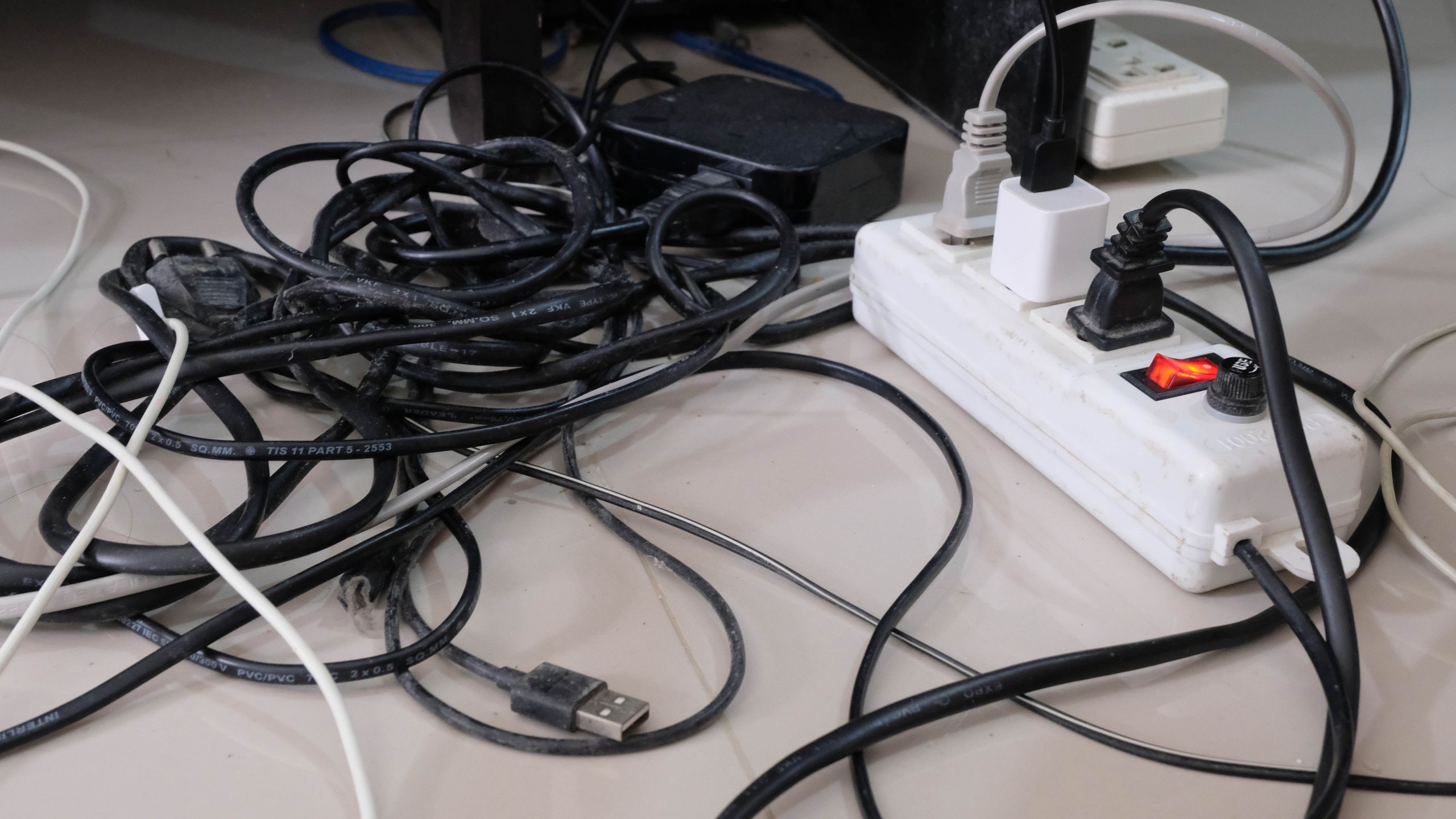
- Enhanced Safety: Dangling cables are notorious trip hazards, especially in offices with high foot traffic or dynamic setups like standing desks that frequently change height. Untangled cables also reduce the risk of accidental disconnections, preventing potential data loss or equipment damage. Furthermore, bunched-up cables can trap heat, posing a fire risk if not properly ventilated.
- Improved Ergonomics and Functionality: A clean desk allows for better positioning of monitors, keyboards, and mice, directly impacting your ergonomic setup. When cables are managed, your desk can move smoothly between sitting and standing positions without snagging or pulling, preserving the integrity of your equipment and your workflow.
- Extended Equipment Lifespan: Cables that are constantly bent, stretched, or pinched are prone to damage. Proper management reduces stress on connectors and wires, prolonging the life of your expensive electronics and their accessories. This proactive approach saves you money and hassle in the long run.
- Reduced Clutter and Stress: A visually chaotic workspace can contribute to mental clutter and stress. By taming the tangle, you create a more serene and focused environment, allowing you to concentrate better on tasks and reduce feelings of being overwhelmed.
- Easier Troubleshooting and Upgrades: When every cable has its place, identifying which cable goes where becomes simple. This makes troubleshooting connectivity issues a breeze and significantly simplifies adding new peripherals or upgrading components without having to untangle a spaghetti monster. Even a quick Context Review: Zero Standing Desk Cable Management Details Found confirms the universal value of clarity, whether in documents or desk setups.
Ultimately, investing time in managing your cables is an investment in your productivity, safety, and peace of mind. It transforms your standing desk from a tangle-prone workstation into a sleek, efficient command center.
Essential Tools and Techniques for a Tidy Standing Desk
Achieving pristine standing desk cable management doesn't require advanced engineering skills, but it does benefit from a few key tools and a methodical approach. The market offers a plethora of products designed to help, but understanding their application is crucial.
Must-Have Cable Management Tools:
- Cable Ties (Reusable & Disposable): Velcro straps are excellent for bundling groups of cables together, offering flexibility for future changes. Zip ties provide a more permanent, secure solution. Have both on hand.
- Cable Sleeves/Wraps: These flexible tubes can encase multiple cables, consolidating them into a single, neat bundle. They come in various materials, including neoprene and braided fabric, and are especially useful for cables running down the desk legs.
- Cable Trays/Raceways: Mounted underneath your desk, these are perhaps the most effective solution for hiding power strips and excess cable length. They keep everything off the floor and out of sight. Some trays are open mesh, others are enclosed channels.
- Adhesive Cable Clips/Mounts: Small plastic clips with adhesive backing that can be stuck to the underside of your desk or desk legs to guide individual cables or small bundles along a specific path.
- Cable Management Boxes: These are ideal for concealing power strips and their bulky power bricks, transforming a messy collection of plugs into a clean, contained unit.
- Desk Grommets: If your desk doesn't have them, consider adding them. These allow cables to pass through the desk surface directly to your components below, minimizing visible clutter.
- Cable Management Spines: For standing desks that move frequently, a cable spine is an articulated solution that neatly bundles cables and flexes as the desk goes up and down, offering excellent protection and aesthetics.
Key Cable Management Techniques:
- Gather and Bundle: Identify all cables and group them logically (e.g., power cables together, data cables together).
- Route and Secure: Use clips and ties to route cables along the desk frame or legs, keeping them out of sight and secure. Minimize slack.
- Elevate and Conceal: Utilize under-desk trays and boxes to lift power strips and bulky adapters off the floor.
- Labeling: For complex setups, small labels on each end of a cable can save immense time during troubleshooting or reconfiguration.
A Step-by-Step Guide to Achieving Cable Nirvana
Transforming a tangled mess into a beautifully organized workspace might seem daunting, but by following a systematic approach, you can achieve remarkable results. Here’s how to effectively implement standing desk cable management:
- Unplug Everything: Start fresh. Disconnect all devices, unplug power strips, and remove every single cable from your desk. This gives you a blank canvas and helps you identify unnecessary cables.
- Assess and Declutter:
- Examine each cable. Do you still need it? Is it the correct length? Replace overly long cables with shorter ones where possible.
- Test all cables and equipment to ensure they work before reorganizing.
- Clean your desk and the area underneath. Dust bunnies and grime have no place in your new setup!
- Position Your Equipment Strategically:
- Place your monitors, computer, and other peripherals exactly where you want them. This dictates the shortest and most efficient cable runs.
- Consider the travel path of your standing desk. Ensure there's enough slack for cables when the desk is at its highest position, but not so much that they dangle when it's at its lowest.
- Mount Power Strips and Hubs:
- Attach power strips, USB hubs, and docking stations to the underside of your desk using screws, adhesive strips, or by placing them in a cable management tray. This is the foundation of keeping cables off the floor.
- Use a cable management box for large power bricks if necessary.
- Bundle and Route Cables:
- Connect power cables to your mounted power strips. Use cable ties to bundle them loosely but securely.
- Connect data cables (monitor, USB, Ethernet) to your computer/dock. Group these cables together.
- Run bundles along the underside of your desk using adhesive clips or cable management raceways. The goal is to keep them flush with the desk surface or hidden in trays.
- For cables running down the desk legs, use a cable sleeve or spine to consolidate them into a single, neat conduit that moves with the desk.
- Manage Excess Length: Avoid coiling excess cable into large, messy loops. Instead, try to use shorter cables. If excess is unavoidable, carefully bundle it with a Velcro strap and secure it discreetly within a tray or behind a desk leg.
- Final Check and Test:
- Plug everything in and test all devices.
- Cycle your standing desk through its full range of motion, observing how the cables behave. Ensure nothing is pulling tight or getting pinched.
- Make any necessary adjustments to cable slack or routing.
Maintaining Your Cable Management System for Lasting Order
Once you've put in the effort to organize your standing desk cable management, the key is to maintain it. It's not a one-time project but an ongoing commitment to a streamlined workspace. Here are some tips for lasting order:
- Adopt a "One In, One Out" Policy: When adding a new device or cable, take a moment to integrate it into your existing system. Don't just let it dangle. If you replace an old device, remove its associated cables.
- Regular Reviews: Periodically, perhaps once a quarter, take a few minutes to inspect your cable setup. Are any ties loose? Have new cables appeared? Is dust accumulating? A quick tidying session can prevent a full-blown reorganization later.
- Labeling is Your Friend: For power-users with many peripherals, simple labels on each end of a cable can save immense time during troubleshooting or when you need to disconnect something temporarily.
- Invest in Quality: While DIY solutions can work, investing in good quality cable management products (like sturdy cable trays, durable sleeves, and reusable Velcro ties) will make the maintenance process much easier and more effective. Cheap adhesive clips often fail, leading to frustration.
- Keep Spares Handy: Have a small stash of cable ties, clips, and even a few different cable lengths ready for when you need to make quick changes or add a new component. This prevents resorting to temporary, messy solutions.
By making these practices a habit, you ensure that your standing desk remains a bastion of productivity and order, reflecting the same principles of precision and discipline found in any high-performing environment, even if the specific topic of cable management isn't explicitly detailed in every institutional guide.
In conclusion, while documents pertaining to esteemed institutions like West Point might not delve into the nuances of standing desk cable management, the principles of organization, efficiency, and safety are universally applicable. A well-managed desk is more than just aesthetically pleasing; it's a foundation for enhanced productivity, reduced stress, and a safer workspace. By investing a little time and effort, armed with the right tools and techniques, you can transform your standing desk into an optimized, clutter-free environment that supports your best work for years to come.